
Help new leaders get up to speed.
Newly hired and newly promoted managers learn the job on your teams, at your teams' expense. We measure where each one is starting, then teach and coach against the problems in front of them. You agree on the priorities and see the progress.
Book a callThirty minutes on Zoom. Which managers, where they are starting, and what has to be different.

The Leadership Acceleration Program’s ninety days
The P×E assessment comes before the first class. The program’s ninety days end with a review on day 90.
| Part of the program | When | What happens |
|---|---|---|
| Eight group classes | One class a week, in weeks 1 to 8 | Each class is 90 minutes and covers leadership fundamentals, leadership styles and leadership behaviors, focused on your company’s values. |
| Four coaching sessions | One session a week, in weeks 9 to 12 | Each session is 45 minutes, with one leader and one coach. The leader brings a real problem from their own team and works through it using what the classes taught. |
| Three bearing checks with you | Day 30, day 60 and day 90 | You meet with us to review how the leader is doing. What has improved in their team? What has not? What should change while there is still time? |
| The Leader Development Tool | Every day, from day 1 to day 90 | The leader uses it to track their development priorities and their role's demands. It also shows the next thing to do. |
The classes come first and the coaching comes after, so every coaching session builds on material the leader has already been taught. A 180-day program includes all of the same parts, spread over twice as long.
Where this usually starts
Most organizations promote their strongest individual contributor and assume the rest will follow. They were promoted for doing their old job well. They have not been told what the new job asks for.
- A technically strong performer was promoted and the team has gone quiet.
- A manager was hired from outside and is still learning how decisions get made here.
- Several supervisors were appointed at once and each is inventing their own approach.
- A leader is working long hours because they are still doing their old job as well as the new one.
The habits we build
A first leadership role depends most on five behaviors. We work on them directly.
- Setting expectations the team can repeat back without checking.
- Delegating with the authority and checkpoints that make ownership real.
- Giving feedback close enough to the event that it can still change something.
- Making decisions at the level of the role, and escalating the ones above it.
- Closing commitments, and saying so when conditions change.
Every leader starts somewhere different
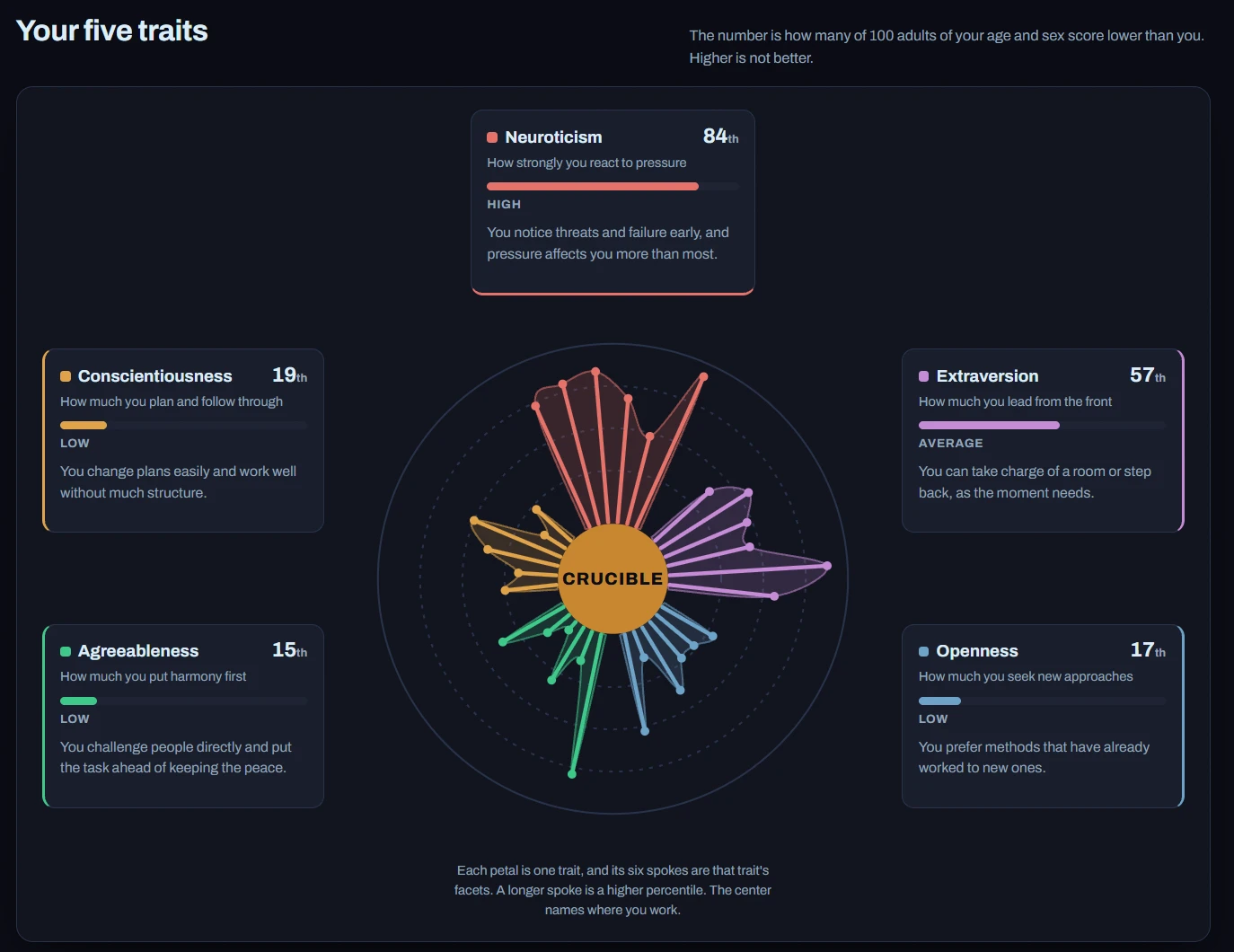
Before the first class, each leader takes the P×E assessment. It measures how that person operates and what their role demands, then returns the skills where the two do not match, worst first. That list becomes their development plan. So two supervisors promoted in the same week usually get different first priorities. The classes, the coaching and the platform all point at it.
What happens between the sessions
The classes and the coaching sessions are only part of the program. Each class ends with one thing for the leader to practice in their own team the following week. The next class starts with what happened when they tried it. Coaching works the same way: the leader leaves each session with something specific to do before the next one. By day 90 of the Leadership Acceleration Program, each leader can say what they changed in their team and what the result was.

What you do as their manager
You develop them. We measure where each leader starts, and we teach the material. These four things are yours.
- You agree on each leader’s starting priorities before the first class. Then the Leadership Acceleration Program’s ninety days aim at what you need changed.
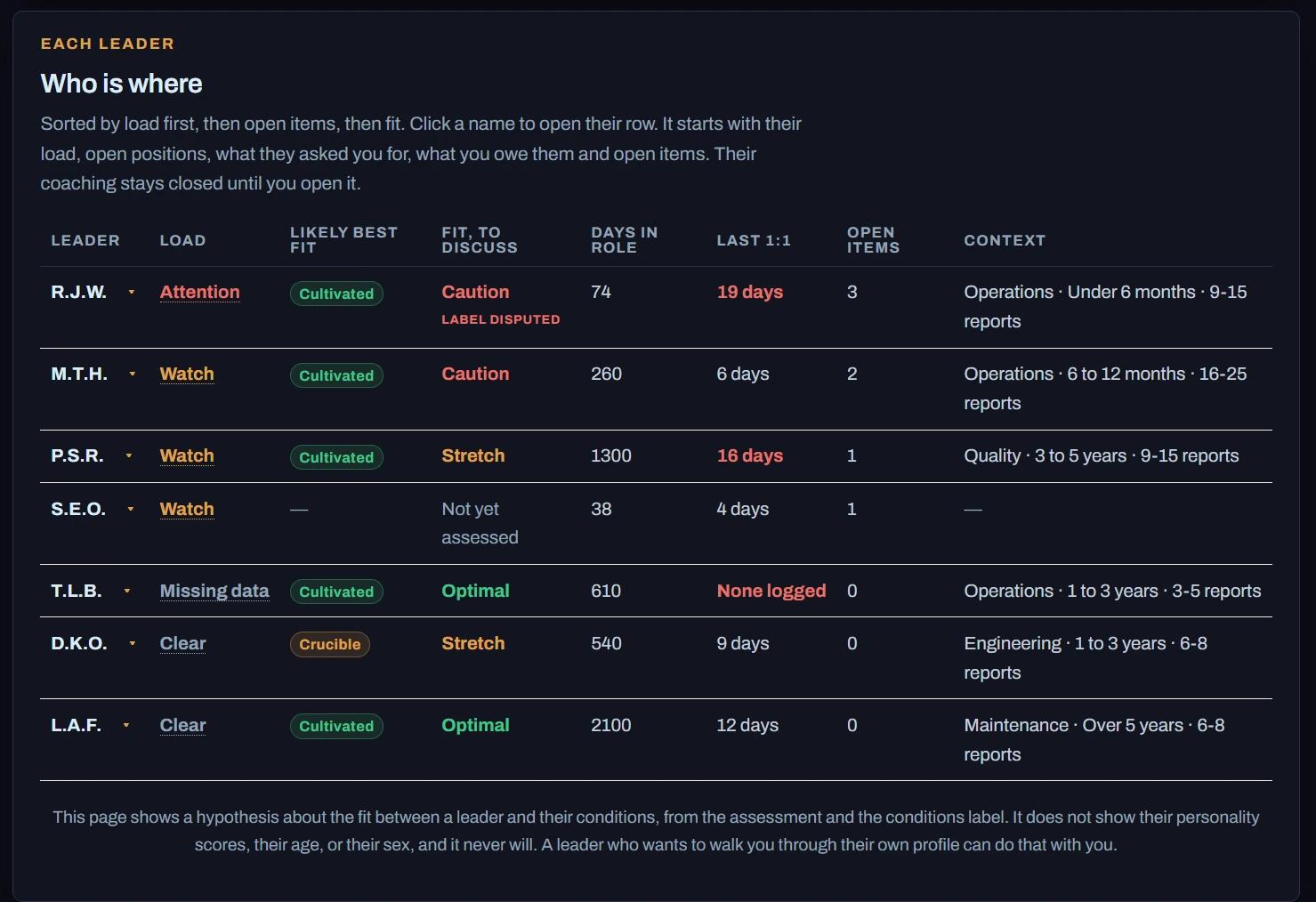
- You get the Team Development Tool. It shows where each leader is, where their habits and conditions do not match, and what to raise with them next.
- At days 30, 60 and 90 you meet with us and tell us what you are seeing from your side.
- You join the review, where each leader presents one problem in their team, what they changed, and the result.
Questions we get
How long does it take?
A Leadership Acceleration Program cohort lasts 90 or 180 days, or follows a customized schedule we build with you. That figure is how long the group is together. Work with a single leader is scoped on the call, from where that leader is starting and what has to change.
Do you work with one leader or a group?
Both. A single leader gets targeted work; a group gets a cohort, which has the advantage that they practice on each other before they practice on their teams.
What does the leader see that we do not?
Coaching conversations are confidential. The development priorities, the plan, and the progress review are shared with the sponsor. We agree on those boundaries before we start.
We already run a leadership course. Why would we add this?
A course teaches the same material to everybody on it. This starts from what the assessment says each leader needs, and it is reviewed against what changed in their team. If your course already does both, you do not need us for this.