
We turn managers into leaders.
Summary Leadership combines instruction, practice, and coaching to help managers build sound judgment, delegate well, and lead their teams with confidence.
Veteran-owned
Kansas City
Founder-led development
Help your leaders get good at the job sooner.
Your leaders want to do this job well. We measure where each one starts. Then we teach and coach them on what their role needs.
A new manager learns the job one way or another. Without a deliberate start they learn by trial and error, and the team lives through each error with them.
We start them on the everyday habits: setting expectations, delegating, giving feedback, and holding the conversations that are easy to postpone.
Everything your leaders need, in a custom approach.
A class is useful only if it changes what happens at work. So every lesson ends with one action at work, and a review checks the result. You see the progress too.
 Assess Measure how each leader works against what their role demands, and start with the widest gap.
 Learn Practice the skill in a class, on the situations the role brings.
 Apply Use it in the leader’s current work, with the next action always clear.
 Review Use coaching and agreed progress reviews to examine what happened and what to change.
See your whole team on one screen.
We optimize your leaders for the environment.
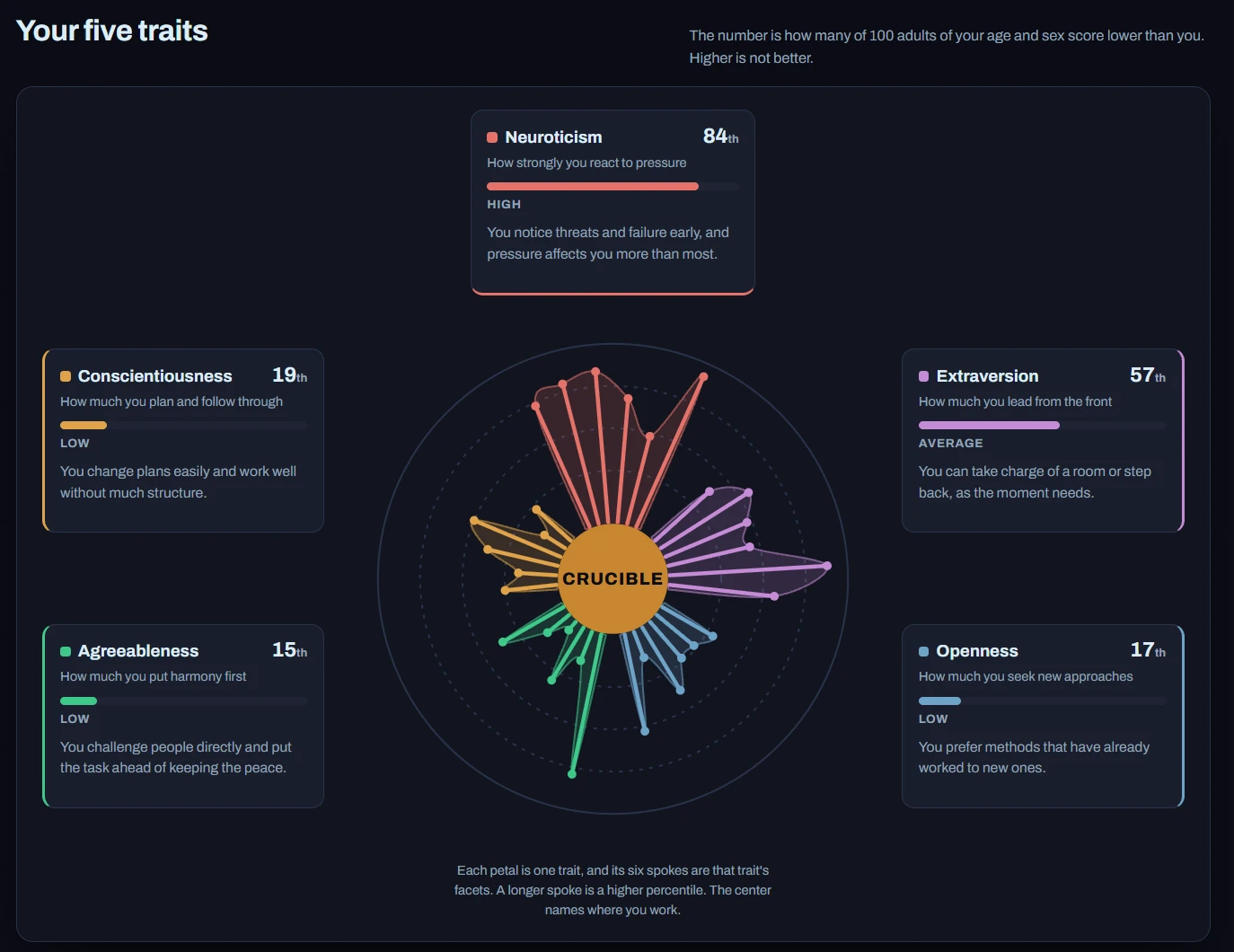
Each leader gets a profile. We combine the profiles in the Team Development Tool, which shows the average and how far apart your leaders are. You see each leader’s strengths and where they need a development path.
Explore our approachWhy choose Summary Leadership for your team?
- Most programs teach a fixed syllabus in the order it was written. We measure how a leader works and what their role demands, then start on the widest gap between the two. Two supervisors promoted the same week usually get different first priorities.
- You develop them. We supply the measurement and the structure. You agree on each leader’s priorities before the first class. You meet with us for three bearing checks during the Leadership Acceleration Program’s ninety days.
- We agree on the measure before the program starts. It uses numbers you already track. On day 90 of the program each leader brings one problem from their own team, what they changed, and the result. Ninety days will not finish a leader. It is long enough to show whether anything moved.

Built from more than 30 years of military leadership and 10 years of research. Applied to your organization.
Summary Leadership is led by G. Damon Wells. He teaches the core skills of leadership early in a leader’s career. He also measures what each role requires. Most leader development programs skip those requirements.
Classes and coaching bring those requirements into the decisions, conversations, and responsibilities your leaders face at work.
Meet DamonLet us design your cohort.
A Leadership Acceleration Program cohort runs for 90 or 180 days, depending on what fits your team. Your managers learn together and practice together. They review the problems they are working on right now. They finish with one approach to decisions and people, and one standard.
Tell us how many leaders you have and where they are starting. We will work out the length and the start on the call.
Book a call